

CO Detector Installation
in Brighton & Hove
Quality carbon monoxide detectors supplied and fitted by a Gas Safe registered engineer across Brighton & Hove, from £49.
- Gas Safe registered since 2011 (Licence No. 534180)
- Detectors in stock, fitted at the same visit as your gas safety inspection
- Open 24 hours, no VAT added
Protect Your Home From the Silent Killer with Brighton Gas Safety
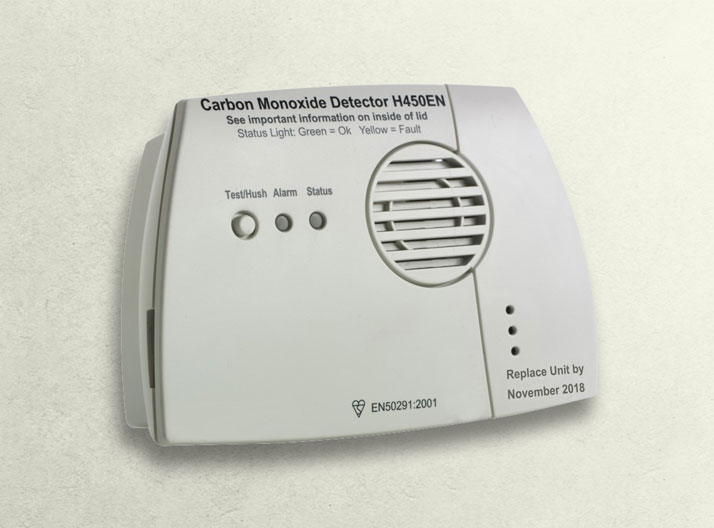
Carbon monoxide has no smell, taste or colour, so without a detector you won’t know it’s there. We supply and fit reliable detectors for landlords, letting agents and homeowners. We always carry them in stock, so we can fit one at the same visit as your gas safety inspection, boiler service or installation.
- Gas Safe Registered. Registered since 2011, so your detector is fitted by someone qualified to work on the appliances that produce CO.
- In Stock, Fitted Same Visit. No waiting for deliveries. We bring detectors with us and fit them while we’re on site.
- Clear Pricing, No VAT. From £49 fitted, with no VAT added on top.
How Much Does CO Detector Installation Cost?
We supply and fit quality detectors at a fixed price per unit.
Brighton Gas Safety will never charge an upfront fee. All work is invoiced after the work has been completed.
Do You Need a CO Detector?
Almost certainly, and for some properties it’s a legal requirement.
1. Landlords
Under the Smoke and Carbon Monoxide Alarm (England) Regulations 2015, as amended in 2022, landlords must provide a CO alarm in any room used as living accommodation that contains a fixed combustion appliance (gas cookers excluded). Alarms must be tested at the start of each tenancy. Landlords who fail to comply can face a civil penalty of up to £5,000. We can fit detectors at the same visit as your landlord gas safety record.
2. New or Replacement Boilers
Building Regulations require a CO alarm when a new or replacement fixed combustion appliance is installed. If we fit your boiler, we’ll make sure a compliant detector is in place.
3. Homeowners and Tenants
There’s no legal requirement for homeowners, but we recommend at least one detector in any building with a gas appliance, including when the appliance is in a neighbouring flat or a communal boiler. Most gas-related CO poisonings happen in owner-occupied homes.

What Is Carbon Monoxide and Why Is It Dangerous?
Carbon monoxide (CO) is produced by the incomplete burning of gas, oil, coal and wood. Boilers, gas fires, cookers, water heaters and solid fuel appliances can all produce it, particularly when they’re poorly installed, badly ventilated or not serviced. Around 40 people die each year in the UK from CO poisoning. The most common causes are a lack of servicing, and faulty flues or terminals.
When inhaled, CO replaces oxygen in the blood, starving the heart, brain and nervous system. Early symptoms are flu-like (headache, dizziness, nausea, tiredness, chest tightness), so poisoning is often mistaken for flu or gastroenteritis. Children, the elderly, pregnant women, pets and people with heart or breathing conditions are affected faster.
| ppm CO | Time Exposed | Symptoms |
|---|---|---|
| 50 ppm | N/A | Safety level as specified by the Health and Safety Executive |
| 200 ppm | 2-3 hours | Slight headache, some may experience slight dizziness, nausea, chest tightness, fatigue, lack of concentration, memory loss. |
| 400 ppm | 1-2 hours | Headache, worsening to a sever headache with prolonged exposure, dizziness, nausea, fatigue, tightness across the chest, memory loss, lack of concentration. |
| 800 ppm | 45 minutes | Headache, dizziness, nausea, convulsions within 45 minutes. Unconscious within 2 hours. Death can occur within 2-3 hours. |
| 1600 ppm | 20 minutes | Headache, dizziness, nausea, convulsions, unconsciousness. Death can occur within 1 hour. |
| 3200 ppm | 5-10 minutes | Headache, dizziness, nausea, convulsions, unconsciousness. Death can occur within 1 hour. |
| 6400 ppm | 1-2 minutes | Headache, dizziness, nausea, convulsions, unconsciousness. Death in approximately 30 minutes. |
| 12,800 ppm | 1-3 minutes | Death |
How to Reduce Your Risk
- Have gas appliances serviced every year by a Gas Safe registered engineer
- Check the flue isn’t blocked and the area around it is clear
- Keep rooms ventilated
- Watch for orange or yellow flames, which suggest poor combustion
- Fit a CO detector and test it regularly
- If you feel unwell, get into fresh air immediately and seek medical advice
CO poisoning - the facts surrounding gas appliances
A lot of people assume “it will never happen to me”. The chances are that it won’t, but it does pay to take precautions to make that risk even less likely. If you know the facts surrounding CO poisoning, you can act to reduce your risk.
The facts below are taken from “A review of carbon monoxide incident information for 2000/2001”. Published by the Health and Safety Executive, the review looks at incidents involving piped natural gas and LPG.
- The months of November, December and January (when the central heating system it at its highest use) have the highest rates for CO poisoning. The heating season (starting from the first cold days of autumn when the central heating system is first put into use, to the time when it is turned off in the spring) is the period where most poisonings happen.
- Most gas related CO poisoning happens in homes where the owner is the occupier (66% according the HSE figures). It is up to you to make sure appliances are installed correctly by a competent installer, are well maintained, serviced regularly (all people installing and servicing gas appliances have to be Gas Safe Registered by law) and you should consider installing a CO alarm.
- By law landlords have to get all appliances serviced yearly, keep them well maintained (including the flue) and have safety checks (gas safety certificate) completed at least every 12 months. The landlord has to keep a record of safety checks made and make it available to the tenant if requested.
- It is reported that the most common faults causing appliances to produce CO gas is a lack of servicing and flue/terminal faults. Next most common is poisoning caused by a lack of ventilation.
- Properties built pre 1945 accounted for 50% of CO poisonings in the financial year between 2000 and 2001. 20% of poisonings occurred in properties built from 1946 – 1965, 20% in properties from 1966-1980, 4% in properties from 1981 – 1991 and 3% from properties post 1992 (3% were unclassified).
- People are most likely to be poisoned in their bedroom or living room.
- Central heating accounts for 80% of incidents and 87% of fatal and non-fatal casualties for the year 2000/2001. Appliances involved in incidents ranged from back boilers, floor standing boilers, wall mounted boilers, wall mounted combi boilers, warm air units, cookers, space heaters and water heaters. Wall mounted boilers accounted for 34% of incidents, floor standing boilers accounted for 25% and wall mounted combi boilers accounted for 24%.
- At 59% of incident sites, the appliance had been installed as new.
- The majority (76%) of appliances involved in a CO poisoning incident are open flued. When these incidents occurred, in 57% of cases the flue was not installed to appropriate standards.
Avoiding carbon monoxide poisoning
Everyone who owns an appliance that uses fossil fuels (gas, oil, coal, wood) should:
- check the flame colour of the appliance (if it is burning orange it is not operating properly and could be emitting CO gas);
- have your appliance(s) serviced every year by someone qualified to work on them. All people working with gas have to be Gas Safe Registered by law;
- maintain all appliances adequately – check in the case of boilers that the flue is not blocked, remove any debris, obstructions or plants from the flue area;
- make sure there is adequate ventilation in your home, not only to vent out any noxious gasses but also to allow oxygen and fresh air into the home;
- invest in a CO detector which can recognise low CO levels and warn you of any change;
- if you are a tenant you should have a safety certificate. Your landlord has to by law have appliances checked yearly. Check if your landlord has fitted a CO detector;
- if you suffer from headache, dizziness, nausea, fatigue, lack of concentration, memory loss, disorientation, irritability and tightness across the chest you may be suffering from CO poisoning. Ask your doctor for a CohB test;
- in mild cases of CO poisoning, victims recover when administered oxygen or simply brought into fresh air. If you start feeling the effects of CO poisoning, get outside of the premises immediately;
- don’t use open flames, ovens etc to heat your home – use appliances only for the purpose they are intended;
- remember it is not just your boilers that are at risk, anything that goes through the process of combustion can produce carbon monoxide. Cookers, water heaters, oil burners, gas fires, open fires, engines and solid fuel appliances to name but a few can all produce CO
Requirements
Legal Requirements: Landlords (England) and new fixed combustion appliance installations, as above.
Recommended: Every building with a gas appliance. We give free advice on placement.
Pricing
We supply and fit quality CO detector priced at £49 NO VAT ON TOP TO PAY ! each if already onsite
Including fitting once at property, we always have them in stock and can provide them at the same time as a Gas Safety report.